Padel vs Tennis: Key Differences in Rules, Cost & Learning Curve
Hakan Aksuman
Veröffentlicht am 26. Mai 2026
6 Min. Lesezeit
Padel vs tennis: how do they differ in rules, court setup, equipment, and cost? A practical Germany-focused comparison for players deciding between the two sports.
Padel and tennis share a family resemblance — rackets, a net, a ball — but the two sports feel completely different once you step on court. If you're deciding which one to take up (or wondering whether to add padel to your tennis game), this guide breaks down every meaningful difference: rules, court setup, equipment, costs in Germany, and which sport suits which kind of player.
Court: The Most Obvious Difference
The most immediate difference is the court. A tennis court is open (no walls), measures 23.77 m × 10.97 m for doubles and 23.77 m × 8.23 m for singles. A padel court is enclosed by glass walls and metal mesh, measures 20 m × 10 m, and is always played as doubles. The walls are in play — a ball bouncing off the back glass is a legal shot, which completely changes tactical thinking.
In Germany, padel courts are rented as a full court for the group of four, while tennis courts are rented per court regardless of player count. This matters for cost calculations: padel's per-player cost is shared across four people.
Rules: Where They Diverge
The scoring system is identical: games, sets, tiebreaks. But several rules differ significantly:
- Serve: In padel, you serve underarm, bouncing the ball before hitting it below waist level. No overhead serves allowed. In tennis, the overhead serve is a weapon in itself.
- Walls: In padel, the ball can bounce off the back and side walls — including after crossing the net — and the return is still legal. This extends rallies dramatically and rewards creativity over raw power.
- Out of court: In padel, a player can exit through the door openings in the back fence and play the ball from outside the court — a legal (and spectacular) shot.
- Let serves: In padel, if a serve clips the net and lands in the correct service box touching the side or back glass, it is a fault (not a let as in tennis).
Equipment: Racket, Ball, Shoes
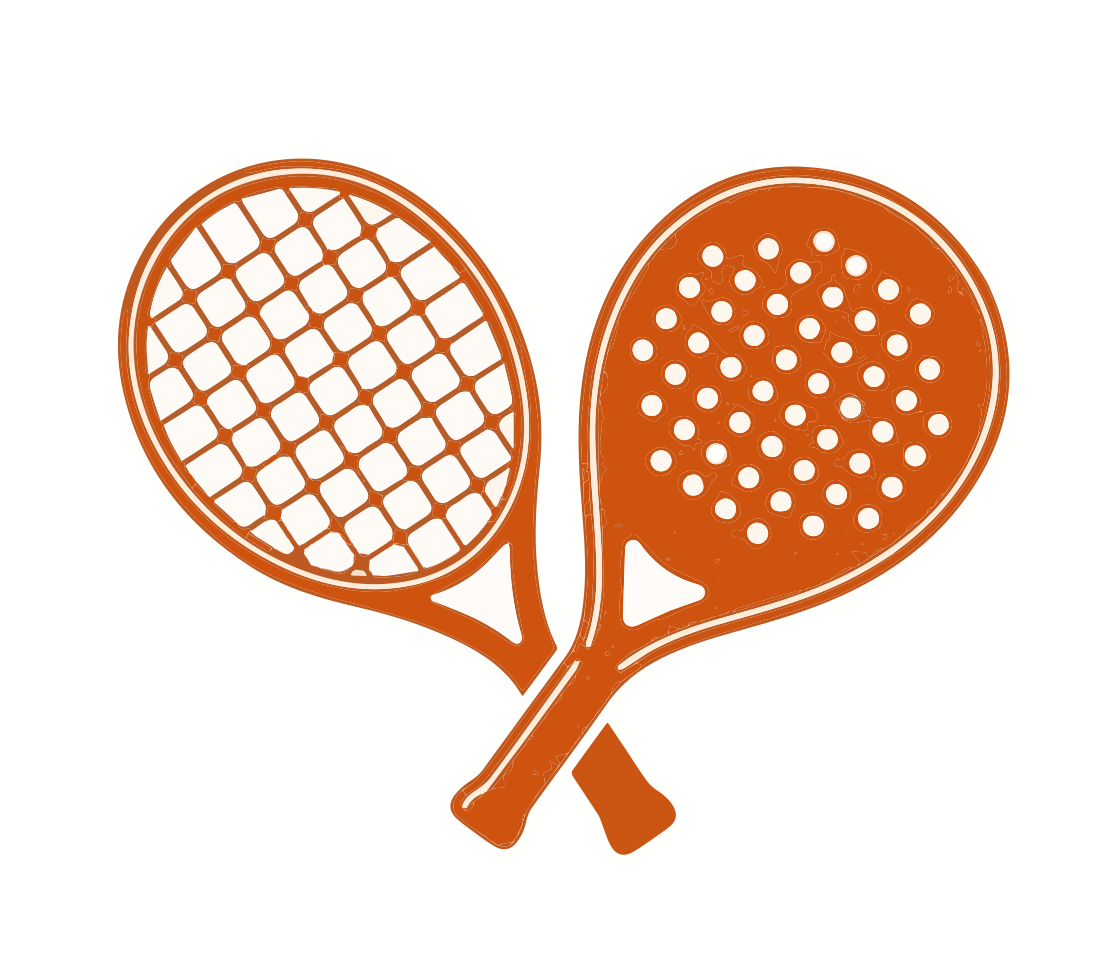
Padel rackets are solid (no strings), smaller, and perforated with holes. They cost €50–€250 for recreational players. Tennis rackets are strung, larger, and range from €50 to €400+ at the performance end. The balls look similar but differ in pressure and bounce characteristics — padel balls have lower internal pressure and bounce less. Both sports use non-marking shoes, but padel shoes are optimised for lateral movement on artificial turf, while tennis shoes vary by surface (clay, hard, grass).
Learning Curve: Which Is Easier to Pick Up?
Padel has a significantly flatter learning curve than tennis. The underarm serve removes one of tennis's hardest skills to learn; the smaller court reduces the amount of running required; and the walls keep the ball in play longer, so rallies happen even between beginners. Most first-time padel players can sustain a rally within 30 minutes. Tennis beginners typically need 4–6 hours of practice before rallying feels natural.
That said, mastering padel takes years — wall play, net positioning, the \"vibora\" and \"bandeja\" overhead shots add enormous tactical depth. Padel is easy to start and hard to master, which is part of why the sport's participation numbers have exploded across Europe.
Cost Comparison in Germany (2026)
Court hire prices in Germany:
- Padel court (full court, 4 players): €40–€80 per hour. Per person: €10–€20 per hour.
- Tennis court (outdoor clay): €10–€18 per hour. Per person in singles: €5–€9 each.
- Tennis court (indoor): €25–€70 per hour total.
For group play, padel is cost-competitive with tennis. A padel court for four at €50/hr means each player pays €12.50 — cheaper than splitting an indoor tennis court between two. Padel's social doubles format has also driven the rise of round-robin evenings at facilities across Germany, where individual players are matched into groups of four without needing to organise their own group.
Which Sport Is Right for You?
- Choose padel if: You are new to racket sports, enjoy social doubles, want fast visible progress, or have a ready group of three others to play with.
- Choose tennis if: You want the option to play singles, prefer a sport with a deeper global competitive structure, or already have a tennis background to build on.
- Play both: Many players find padel's social doubles format complements tennis perfectly — padel for social evenings, tennis for individual skill development.
Frequently Asked Questions
Which is easier to learn — padel or tennis?
Padel is considerably easier to pick up. The underarm serve, smaller court, and wall play all lower the entry barrier. Most beginners can rally within their first session. Tennis requires more technical groundwork before the game feels fluid.
Which is cheaper to play in Germany?
For group play, padel is highly cost-effective at €10–€20 per person per hour when split four ways. Solo or doubles tennis on an outdoor clay court is cheaper at €5–€15 per person, but indoor tennis quickly becomes expensive at €12–€35 per person per hour.
Can I play both padel and tennis?
Absolutely — many players do. The sports complement each other well. Your tennis groundstrokes transfer to padel; padel sharpens your net play and court awareness. The main adjustment is the underarm serve and wall tactics in padel, and the open-court geometry in tennis.
Whether you're drawn to padel or tennis, you'll find courts and courses across Germany on RacketTogether. Browse available courses or find venues near you and book your first session today.
Hakan Aksuman
CEO & Mitgründer von RacketTogether. Tennisspieler und Sportbranchenkenner.
Mehr über das Team